Find your dress size in US, UK, EU, and International sizing. Enter your bust, waist, and hip measurements to get your size across all major systems instantly.
cm
in
cm
in
cm
in
US
—
UK
—
EU
—
Int'l
—
Bust—
Waist—
Hips—
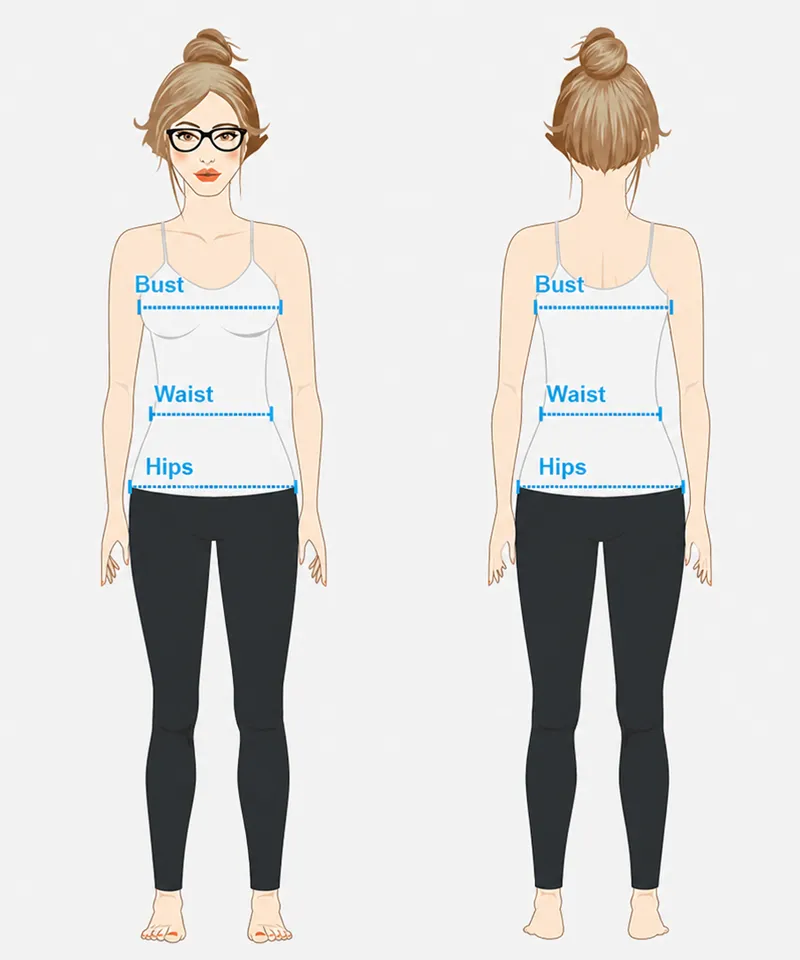
How to Measure
Take three measurements with a soft measuring tape:
Bust — around the fullest part of your chest, tape parallel to the floor
Waist — around the narrowest part of your torso, just above the belly button
Hips — around the fullest part of your hips and buttocks, 7–9 inches (18–23 cm) below your waist
Use the unit dropdown on each field to switch between cm and in.
International Dress Size Chart
Bust (cm)
Waist (cm)
Hips (cm)
US
UK
EU
Int’l
up to 74
up to 58
up to 80
00
2
30
XXS
74–77
58–61
80–84
0
4
32
XS
78–81
62–64
85–89
2
6
34
XS
82–85
65–68
90–94
4
8
36
S
86–89
69–72
95–97
6
10
38
S
90–93
73–77
98–101
8
12
40
M
94–97
78–81
102–104
10
14
42
M
98–102
82–85
105–108
12
16
44
L
103–107
86–90
109–112
14
18
46
L
108–113
91–95
113–116
16
20
48
XL
114–119
96–102
117–121
18
22
50
XL
120–125
103–108
123–128
20
24
52
XXL
126–131
109–114
129–134
22
26
54
XXL
US vs. UK vs. EU Sizes
The three main sizing systems use the same body measurements but different numbering:
US sizes run in even numbers: 00, 0, 2, 4, 6 … 22
UK sizes are 4 higher than US: US 4 = UK 8, US 10 = UK 14
EU sizes are 32 higher than US: US 4 = EU 36, US 10 = EU 42
International labels (XS through XXL) group two consecutive sizes together and are the least precise of the four systems.
Why Your Measurements May Suggest Different Sizes
Most people’s bust, waist, and hip measurements correspond to slightly different sizes — this is completely normal. The calculator recommends the largest of the three suggested sizes so the garment fits comfortably across all areas.
If your measurements consistently differ:
Stretchy fabrics — accommodate a range of measurements
Separates — buy tops and bottoms in different sizes
Tailoring — alter the waist on a dress that fits through the bust and hips
Frequently Asked Questions
How do I measure my bust for dress sizing?
Measure around the fullest part of your chest, keeping the tape parallel to the floor. Do not pull the tape too tight — it should sit comfortably against your skin. Measure over your bra or a fitted top for the most accurate result.
How do I measure my waist for dress sizing?
Measure around the narrowest part of your torso, usually just above your belly button. Keep the tape level and relaxed, not pulled tight. Breathe normally and do not suck in.
How do I measure my hips for dress sizing?
Measure around the fullest part of your hips and buttocks, keeping the tape parallel to the floor. This is typically 7–9 inches (18–23 cm) below your natural waist.
What does it mean when my measurements give different sizes?
It is common for bust, waist, and hip measurements to suggest different sizes. The calculator recommends the largest suggested size so the garment fits across all areas. For a more tailored fit, consider clothes with stretch fabric or buy separates in different sizes.
What is the difference between US and UK dress sizes?
UK dress sizes are 4 numbers higher than US sizes. For example, US size 8 equals UK size 12, US 10 equals UK 14, and so on. Both systems use the same body measurements — they just label them differently.
What does EU dress size mean?
EU (European) sizes are typically 32 higher than US sizes. For example, US size 4 is EU 36, US size 8 is EU 40, US size 12 is EU 44. EU sizing is used across most of continental Europe.
What do XS, S, M, L, XL mean in international sizing?
International sizing groups two consecutive sizes together: XS covers US 2–4, S covers US 4–6, M covers US 8–10, L covers US 12–14, XL covers US 16–18, XXL covers US 20–22. Exact ranges vary by brand.